
Quiet The Contrary
Speaking volumes with no volume at all
The Ancient Art of Shutting the Hell Up
Every spring, as the snow melts and the birds return, something else emerges from hibernation: the Manitoba spring ice storm.
Also, meetings.
So. Many. Meetings.
When April 1 marks the beginning of your workplace’s fiscal year, as it did for me, spring becomes less a season and more a gauntlet of scheduled conversations.
Meetings to discuss service changes for the upcoming business year.
Meetings to establish program committees.
Program committee meetings to create subcommittees, which themselves spawn yet more meetings.
It all eventually culminated in a daily eight-hour meeting where I was the only attendee, called “work.”
And it’s during this annual migration of unnecessary talking that I find myself thinking about the fine art of speaking volumes with no volume at all — a skill the ancients mastered long before the invention of the conference call.
Pythagoras, for example, famously said, “A fool is known by his speech, and a wise man by silence.”
Pythagoras could’ve skipped geometry entirely and made a killing 2,500 years ago as a toga-wearing Tony Robbins, delivering seminars on The Transformative Power of Shutting Your Baklava Hole to a bunch of confused Greek dudes wondering where in the Underworld he got that cool headset microphone.
But thank Zeus he didn’t pursue public speaking — if he had, we’d likely still be trying to figure out how to calculate the hypotenuse of a right triangle with sides of 3 and 4.
Abraham Lincoln, meanwhile, gave us the classic:
“Better to remain silent and be thought a fool than to speak out and remove all doubt.”
Lincoln would’ve been great in meetings.
He’d say absolutely nothing, get credit for being some sort of insightful genius, and then — duly admired for his wisdom — be given permission to duck out early so he could hit the “will call” window to pick up his theatre tickets.
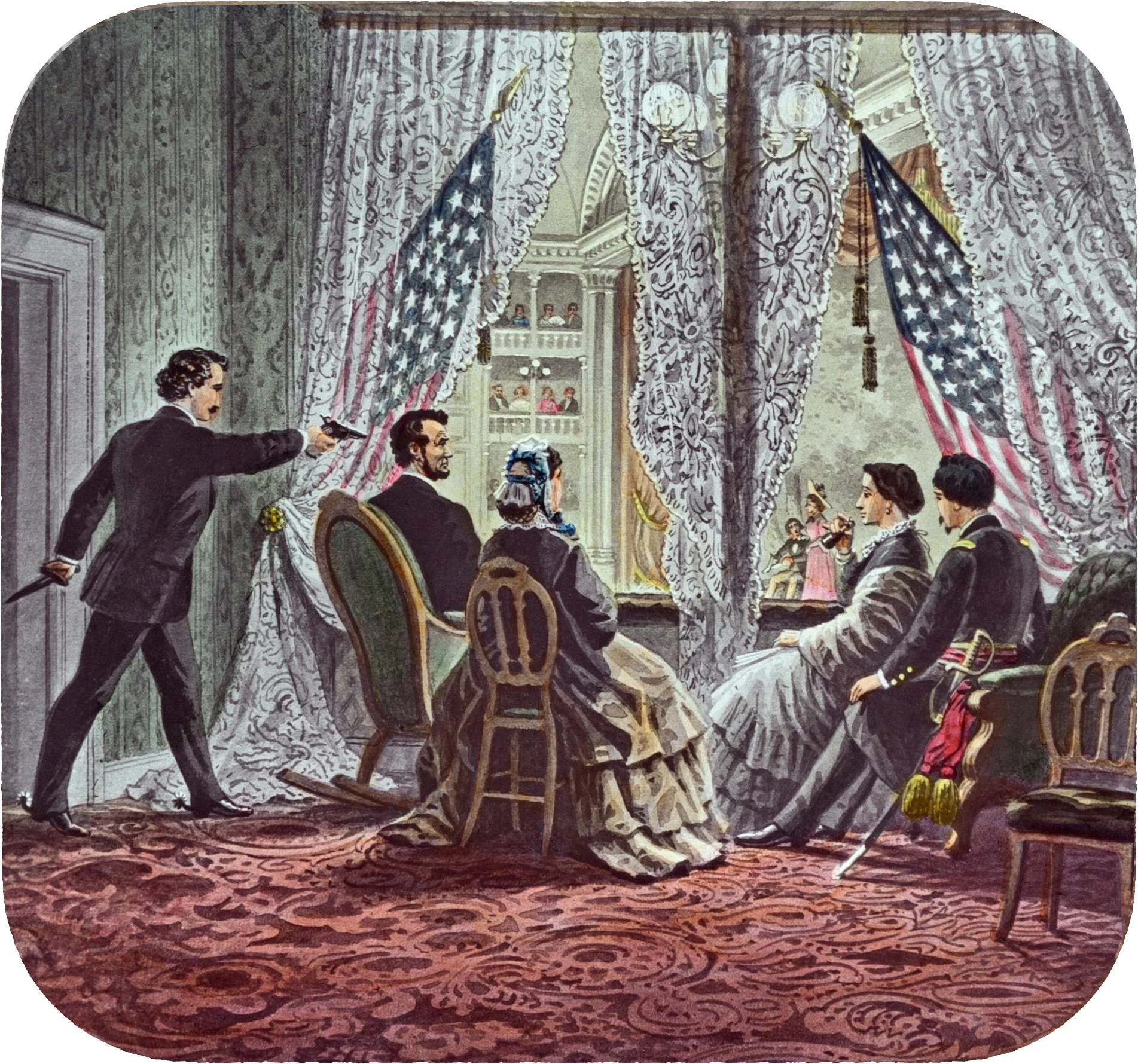
Too soon? It’s been 160 years. I think we’re okay.
And then there’s Plato, who is credited with saying:
“Wise men speak because they have something to say; fools because they have to say something.”
If Plato really said that, he clearly never had a manager who forced everyone to “go around the room and share,” which is less a meeting technique and more a group-therapy exercise for people who hate groups and didn’t sign up for therapy.
The point is: humanity has been trying to tell us for centuries that sometimes the smartest thing you can do is shut the hell up — and that silence, used well, can communicate more than a 20-slide deck ever could.
Silence as a Meeting Strategy
Some people walk into meetings armed with data, enthusiasm, and colour-coded binders.
I walked in armed with silence — a tool far more versatile than anything you can find in your office’s supply cabinet, and much more cost-effective as well.
Now, to be clear, I wasn’t completely disengaged.
I did my job.
I contributed meaningfully when it mattered.
And I paid attention a good 30% of the time — which, in meeting math, is basically the gold standard for participation.
But silence was still my go-to strategy, and for several very practical reasons.
First, it all but guaranteed I wouldn’t accidentally volunteer for tasks I either couldn’t understand or couldn’t accomplish.
I’ve always had a keen awareness of my limitations.
My biggest strength is knowing what I’m good at, and more importantly, knowing what I should never be trusted with.
Silence helped ensure that the bar of expectations others had set for me stayed low enough for me to successfully step over when required.
It was less “under-promise and over-deliver” and more “don’t promise anything and hope no one notices.”
Silence also had a way of turning other people’s discomfort into my productivity.
If you pause long enough after a question is asked in a meeting, someone else will eventually get uncomfortable enough to answer it for you.
It’s basically a way of outsourcing your engagement at work.
Why strain your brain and risk sounding completely clueless when someone else’s anxiety can do the heavy lifting?
And then there’s the nod — my favourite meeting manoeuvre.
This one is best deployed when someone tables an idea for consideration.
Just a slow, pensive nod.
PRO TIP: For added effect, follow the nod with a subtle tilt of the head up and to the left while gazing off into the distance, then include a slightly furrowed brow as if to underscore that you’re mulling over the pros and cons of what’s just been said.
This taciturn gambit communicates absolutely nothing beyond:
“Yes, I’m pretending to understand what’s being discussed.”
It was a gesture that feigned engagement when in reality it was me struggling to remember if I left the garage door open.
And the beauty of staying quiet in a meeting is that if you stay silent long enough, others assume you’re wise.
Or asleep.
Either way, they leave you alone.
It’s the closest thing the workplace has to a force field.
Silence in Conflict
If you’ve never had the pleasure of engaging in a heated discussion with a coworker or loved one, then you are a true rarity — the conversational equivalent of a vending machine where your chips don’t get stuck in those brilliantly engineered snack-delivery coils.
But for the rest of us, silence can play an important role in a surprisingly effective conflict-resolution strategy.
When an argument starts heating up, one of the most powerful things you can do is simply…
nothing.
Responding with stone silence for just a few seconds — especially to accusations and personal attacks — does wonders in a couple of very different ways.
First, if your verbal sparring partner is like most people, they’re not really going to listen to your response anyway.
In an argument, people have very little interest in hearing what you have to say — especially once they’ve swerved across six lanes on the “Let’s discuss this reasonably” freeway to take the “You are so dead!” offramp.
Once an argument escalates, nobody is listening anymore. They’re just loading the next verbal missile.
But if you say nothing back to them, you’re at least not giving them anything new to twist, reinterpret, or weaponize.
The only thing they’re left with is the last thing they said.
It forces them to experience the gravity of their own words — probably for the first time.
Your silence gives them space to realize they’re wrong without you having to point it out.
Second, and most importantly, sometimes the best thing you can do during an argument is say nothing — especially if the alternative is saying what you’re actually thinking.
We’ve all been in those moments where you have a devastating comeback cued up, ready to launch.
And yes, unraveling what they said, highlighting their hypocrisy, and surgically dismantling their argument point by point until it’s nothing but a smoking crater at their feet is deeply satisfying.
But as tempting as it is, this is never a good idea. It will only make them feel resentful, embarrassed, and even angrier.
The goal is to deescalate the situation, not win a debate tournament.
Not worth it.
Take the high road.
Some things, as the saying goes, are better left unsaid.
Or, as my Mom would say, “If you can’t say something nice, don’t say anything at all.”
I wholeheartedly agree — and would add, “Or at least save it for a group chat with your closest friends, where it can be properly appreciated.”
Silence as Engagement
The idea of making a conscious effort to hear and understand what someone is saying is at the heart of something called active listening.
Active listening isn’t just paying attention to what’s said — it’s paying attention to what isn’t being said.
Appraising a person’s non-verbal cues — their eye contact, their body language, or the rage on their face as they beat you unconscious with a three-ring binder — is just as important.
Active listening also requires not being judgmental.
For example, no matter how mad you are at someone, you should never insult them by, say, calling their common sense or intellect into question.
It also involves offering open-ended statements to clarify the conversation, using phrases like “What I’m hearing is…” or “It sounds like you’re saying…”
For instance:
“What I’m hearing is that common sense has filed a restraining order against you.”
Or:
“It sounds like you’re saying you are a blithering dunderhead.”
PRO TIP: When casting shade upon others, avoid using words like “imbecile,” “idiot,” or “moron.” Although these were once clinical terms, they’ve long since fallen out of favour. Instead, when describing the annoying people in your life, it’s best to stick to more colloquial disparagements like “dunderhead,” “half-wit,” or “schlub.”
I’m like most people — I listen best when I’m silent.
Unfortunately, I’m also silent when I’m confused, overwhelmed, or thinking about sandwiches, so people tend to assume I’m paying attention even when I’m mentally considering bread and cheese options.
But silence does something useful in conversation:
It tells people you’re engaged — or at least polite enough not to interrupt with a story that’s only tangentially related.
Over the years, I’ve mastered the art of the polite silence — the one that says, “I heard you, I respect you, and I will absolutely not be responding to that.”
Remember, not every thought needs to be shared. Some thoughts should stay in the drafts folder of your brain forever.
And some, let’s be honest, shouldn’t have even made it that far.
Silence as Self‑Control
I’ve learned to stay quiet when I’m angry, tired, hungry, or awake.
That generally covers all the bases — although it does mean I’m free to say whatever I want when I’m fully asleep.
Which is good, since that’s when I’m likeliest to be the most lucid.
Sometimes I don’t speak because I’m being thoughtful.
Other times it’s because I know that if I open my mouth, the truth will tumble out — and the truth is rarely the most diplomatic option to shoehorn into a conversation.
Most people struggle enough with small talk and benign pleasantries to keep things flowing.
If, on the other hand, you’re a raging sociopath who enjoys derailing pleasant conversations, try injecting a little honesty.
For example, stare blankly at your wife’s new hairdo and ask,
“Did you give our son a timeout for doing that?”
See how that goes.
Instead, smiling politely and keeping your mouth shut might spare you a four-hour wait in the emergency room that ends with a smart-ass proctologist dislodging one of your wife’s Birkenstocks and sending you off with some Demerol.
But silence doesn’t just keep you from saying something you’ll regret — it also changes how people see you.
Silence makes you seem discreet. Or suspicious.
It’s a fine line.
But either way, people project competence onto quiet people.
It’s a bona fide life hack: say nothing, and others will assume you’re thinking deeply when you’re really just trying to finish the Wordle you abandoned five minutes earlier.
And sometimes the kindest thing you can do is shut the hell up and let someone else talk.
Silence is the gift you give when you know your opinion will not improve the situation — a rare and underrated act of generosity.
At the end of the day, I’ve never said,
“Wow, I wish I’d talked more today.”
Or,
“My brilliant opinions and insights were not shared with others nearly enough.”
And silence — with the possible exception of the silent treatment — is something you’ll never have to apologize for.
In the vast catalogue of things that can torpedo a relationship, that alone feels like a win.
Silence never gets you in trouble. Words absolutely do.
Unreservedly Reserved
Pythagoras, Lincoln, Plato — they were all trying to tell us the same thing:
You don’t have to fill every silence.
You don’t have to respond to every comment.
You don’t have to narrate your every thought.
(Because, trust me, no one gives a whit about your unsolicited opinion. Especially if you’re one of those people who insists on giving their four cents when nobody even asked for two.)
Silence isn’t about withholding.
It’s about choosing.
Choosing to listen instead of react.
Choosing to think instead of perform.
Choosing to create space instead of filling it with noise.
(Unless it’s the kind of silence where you walk into a room and everyone suddenly stops talking. Then you’re allowed to ask questions.)
That’s how you speak volumes with your volume turned all the way down — not by disappearing, but by being present in a way that doesn’t demand attention.
Silence feeds clarity, coherence, and precision.
Which is probably why I’ve never personally experienced any of those things.
But the people who do use silence well — especially to listen deeply — are the ones others tend to trust.
Not because they have all the answers.
But because they’re making room for the best answers to surface.
Because silence is where the truth lives.
And if you stop talking long enough, you might actually hear what’s going on inside your own head.
Meetings are loud.
Your spouse is loud.
Our own thoughts are loud.
The world is loud.
Which is why, sometimes, the wisest thing you can do is just shut the hell up.
Especially in meetings.
Because if you stay quiet long enough, someone else will volunteer for the task.
Like what you read? I write, rewrite, overthink, rewrite again, and eventually post these things in hopes they resonate. If something struck a chord, sparked an idea, or — most importantly — made you laugh, please drop a comment below. Sarcasm is welcome, cruelty is not. So be honest, and be nice. It’s possible to do both.
And if you'd like to support the effort (or just bribe me to keep going), you can buy me a coffee. No pressure — but caffeine is a powerful motivator.
Full disclosure: you can’t actually make me buy a coffee with your donation. I might use it for a beer instead.