
Noticed and Appreciated
Three simple words of gratitude, and why they matter.
The Currency of Cubicle Life
There’s a universal truth about office work: if you dangle free pizza in front of a group of employees, they will bolt faster than Olympic sprinters in pursuit of a gold medal. Forget quarterly bonuses or career advancement — nothing motivates quite like the promise of lukewarm slices of pepperoni and mushroom served in a grease-saturated cardboard box.
Sometimes, though, the most valuable “reward” isn’t edible, spendable, or redeemable for clothing emblazoned with the company logo. Sometimes it’s a hastily typed email from your boss saying, “Hey, thanks for not letting the office descend into anarchy last weekend.” And if you’re like me, you print that email and treasure it like a Gordie Howe rookie card.
I know, it sounds ridiculous. Yet those rare moments of recognition — the memo, the post‑it note, the email that didn’t just say “good job” but actually meant it — carried more weight than any gift card or pizza party ever could. Which raises the uncomfortable question: if these gestures are so powerful, why are they as scarce as a day when no one mucks about with the office thermostat?
So, in the spirit of the upcoming holiday season and the giving that goes with it, let’s take a look at the sometimes thorny topic of employee gratitude, including what companies actually do versus what employees value.
Show Me the Marmalade
The business world has long assumed that the only way to motivate employees is through cold, hard cash. And with good reason: for thousands of years, humanity has clung to this whimsical notion that food, clothing and shelter might improve our well-being — almost as if they were necessities. So we’ve been only too willing to fritter away our hard-earned money on ramen, rugby pants and rent.
Over time, though, companies began to get more creative with how they showed gratitude. For example, Christmas bonuses may still show up as a tidy (or tiny) sum on your paycheque, but sometimes you get a turkey, a gift card, or an extra day or two of vacation instead.
Or maybe something truly extravagant, like a one-year membership to the “Jelly of the Month” Club.

Cousin Eddie: “It’s the gift that keeps on giving the whole year.”
In this case, it gave us 22 colourful adjectives and a splendidly churlish noun deployable during boss-related rants at family gatherings.
Not every perk is godawful, mind you, but reality often rivals — and occasionally eclipses — National Lampoon levels of absurdity. When asked to recount the most abysmal, thoughtless, strangest, or lamest bonuses or benefits they were ever given from their employers, Reddit users did not disappoint:
A voucher for a turkey — which turned out to be a coupon for $5 off if the turkey purchased was at least $25
A slice of pizza — while managers got a catered lunch from a nice restaurant
Gift cards worth less than their face values — and sometimes with no balance whatsoever
A bobble-head of one of the executives
A wine glass etched with the corporate logo — gifted to an employee the company knew was a recovering alcoholic
A poker chip with the word “APPRECIATION” on it — literally a token of appreciation
A CD featuring the owner of the company playing Christmas music… on an harmonica, no less
The consensus across the subreddits was clear: most people would have preferred being given nothing at all.
Jelly, and gift cards, and fleece! Oh, my!
Bonuses, prizes, and perks — the default carrots dangled in front of us — are transactional rewards. Transactional rewards are exchange-based, meaning they are tied to achieving a specific short-term goal. Like closing a deal. Or finishing a project on time. Or successfully completing an anger management class and going an entire fiscal year without strangling a coworker.
Transactional rewards are usually monetary but can often manifest in other quaint forms like an expiring coupon for free nachos from a local watering hole (valid with a minimum $75 bar tab, of course) or a fleece vest with the corporate logo on it that will transform into a misshapen, threadbare rag after a couple of washings. Irrespective of what it looks like, the unassailable logic here seems to be: if you can eat, wear or spend the reward, you’ll feel appreciated.
Meanwhile, the intangible stuff — the thank‑you note, the email, the memo — falls into the category of relational rewards, which consider a long-term timeline, and focus on personal fulfillment. These types of rewards are things like recognition, praise, and development opportunities. It’s not about a transaction; it’s about acknowledgment.
But relational rewards can have their own difficulties. Planning an individualized gift of genuine gratitude in recognition of someone and something specific requires far more synaptic bandwidth than buying fifty or sixty $20 Tim Horton’s gift cards to give out to everyone. These kinds of rewards can be harder to objectively measure and dole out. Plus, there’s always the danger that this type of appreciation will be received less than enthusiastically by those who aren’t getting it. If you aren’t careful, what was supposed to be a nice gesture for someone can stir up feelings of jealousy and resentment among others.
So, because they’re more difficult to manage, relational rewards are often rebuffed by management even though they are far more personal and way cheaper.
Endangered Species: The Corporate Thank‑You
It didn’t happen often, but every now and again I was vested the rarest of corporate artifacts: a personal note of gratitude.
Like any endangered species, sightings were infrequent, and each one felt worthy of careful documentation — proof that the creature still existed in the wild.
One such time was related to an emergency that cropped up on Mother’s Day weekend. I’m visiting my parents, enjoying the kind of wholesome family time that the HR column in the company newsletter insists we all need, when my boss calls Sunday morning. “Hey, sorry to bug you, but can you leave now and come back to the office to help us put out a fire?”
So I cut the visit short, drove three hours back, went straight to the office, and spent another two or three hours with a couple of other poor souls fixing the issue. Two days later, I got a memo from the GM apologizing for wrecking my Mother’s Day and thanking me for coming in.
And there was another time related to a system failure. When the cheque run crashed halfway through, I had to email everyone to sign off the system so I could reset the database, diagnose the problem, then run the cheques off again. Once all the cheques were produced correctly, I emailed everyone advising them that they could sign back on. It wasn’t anything extraordinary or special that I did; in fact, it was exactly how I would typically handle this or any other similar situation. But the next day our CIO sent me an email to thank me for my communication to the rest of the office.
The point is, I kept the memo and the email. Still have them both.
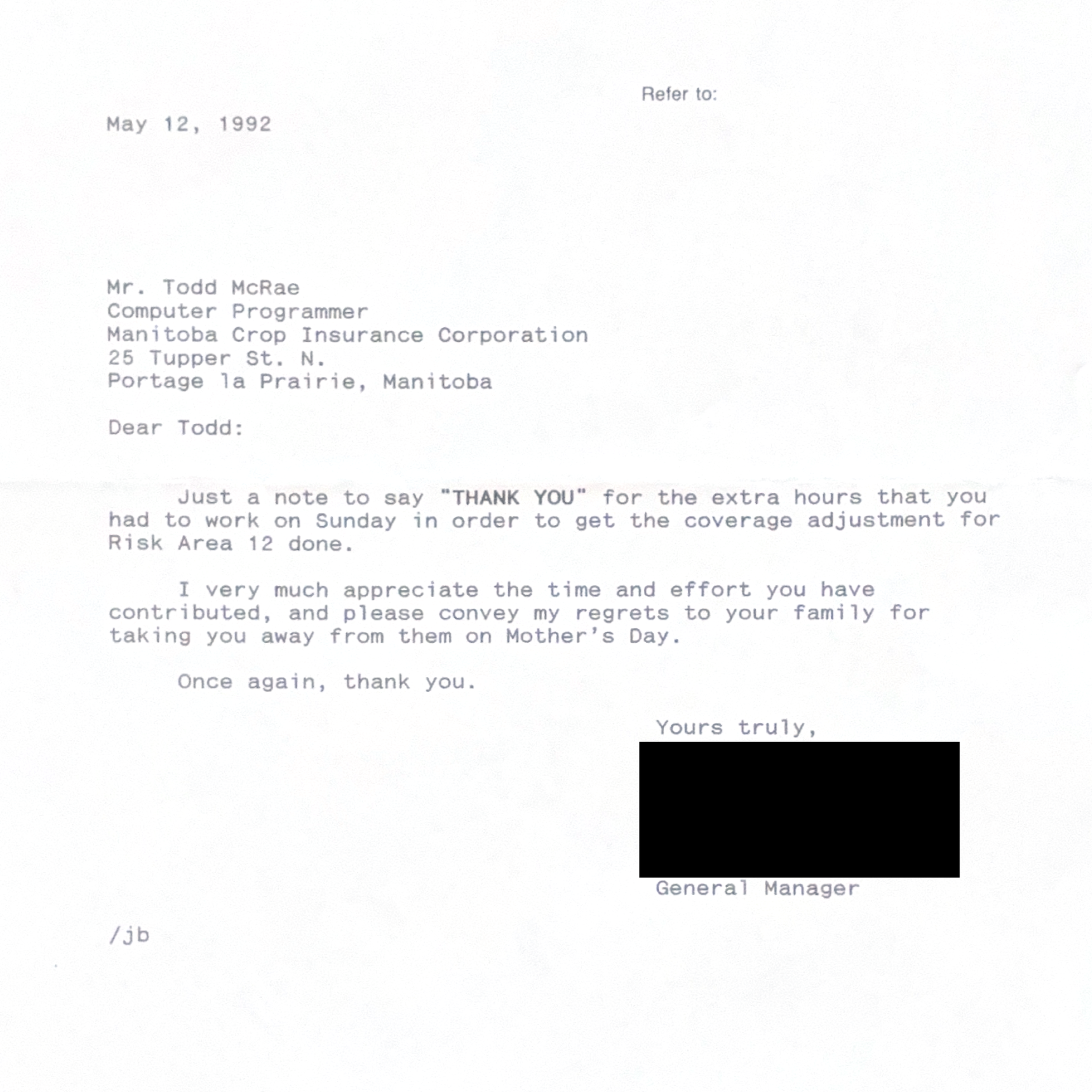
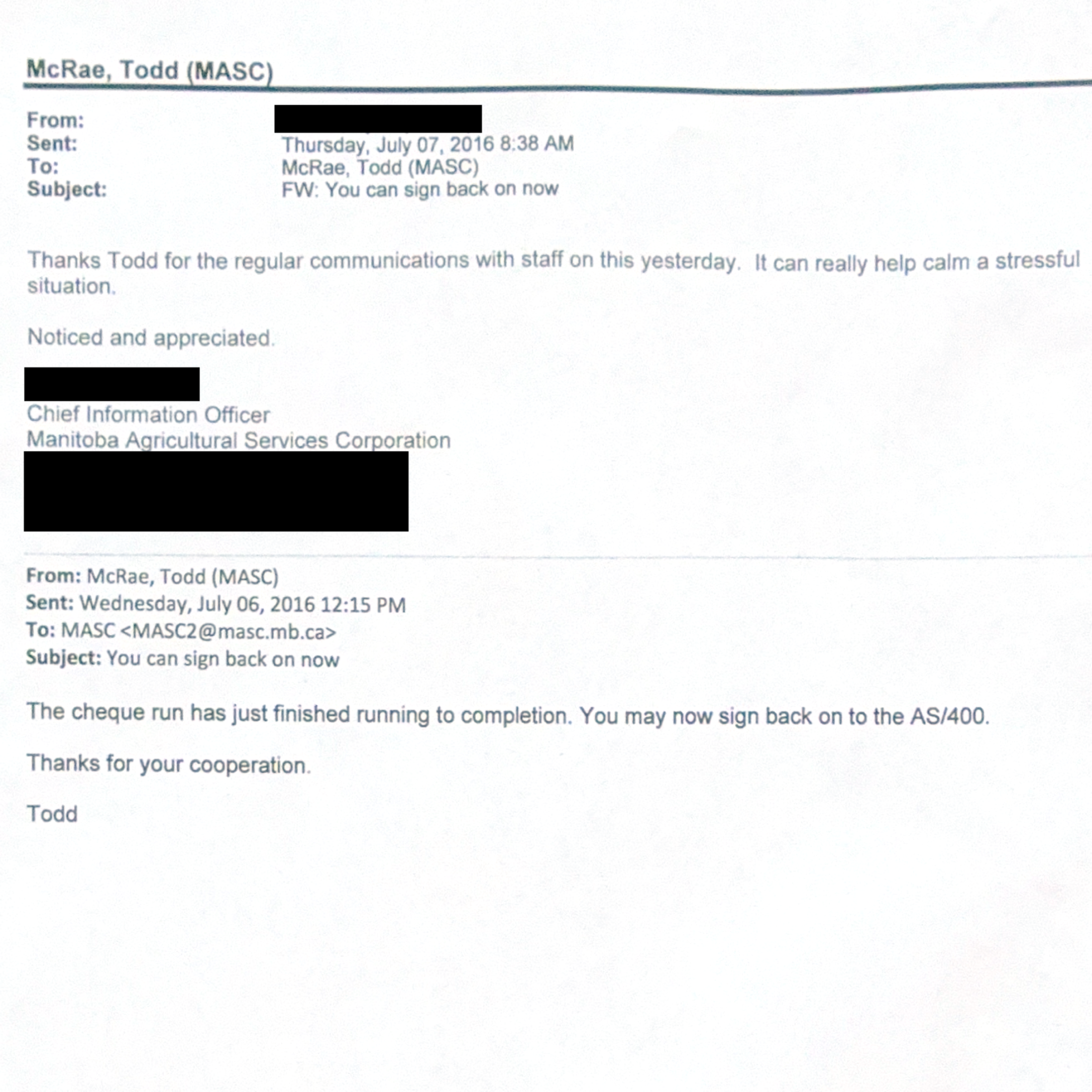
Two letters of commendation in a little over 26 years. Not too shabby.
NOTE: Names redacted to protect the kind-hearted.
Why did I keep them? Because it mattered. It was acknowledgment. It said, “We see you. We appreciate you.” And that was worth more than any branded fleece vest.
These scraps of paper carried real meaning. They reminded me that behind all the work, the meetings, the decisions and deadlines, there were actual humans who occasionally noticed when someone went above and beyond. Which makes me wonder: were these gestures just meaningful to me? Was I in a narrow demographic who truly appreciated things like this? And is that why they seem to be so rare?
The Strategic Avoidance of Recognition
Some bosses seem to confuse a “debt of gratitude” with an actual debt — as if saying thank you might show up on the balance sheet under “liabilities”. Maybe it was safer to avoid it altogether than to risk having one of those annoying auditor busybodies ask why thoughtfulness wasn’t budgeted.
By any metric, gratitude should be the most adopted management tool in existence. It requires no budget approval because it costs nothing, staff genuinely appreciate it, and it doesn’t even need to be delivered as a PowerPoint presentation. Yet somehow, many bosses treat “thank you” like it’s a rare earth element that can only be mined and disbursed during a sighting of Haley’s Comet.
At best, recognition seems to be on the periphery of many businesses’ radars. So why, exactly, might management be loath to express gratitude? Well, let’s speculate:
They assume the paycheque is the thank you. After all, what says “we appreciate you” more than those biweekly direct deposits and that annual t-slip reminding you that your taxes could bankroll a mid‑sized European opera house for a season?
They think employees wouldn’t value it. Because clearly, the only thing keeping us motivated is the occasional gift card or an office raffle for a frozen turkey.
They’re allergic to sincerity. Somewhere in the management handbook between “Dress Code” and “Expense Policy” is the “Emotional Distancing” section with the rule: Never let employees suspect you’re capable of benevolence.
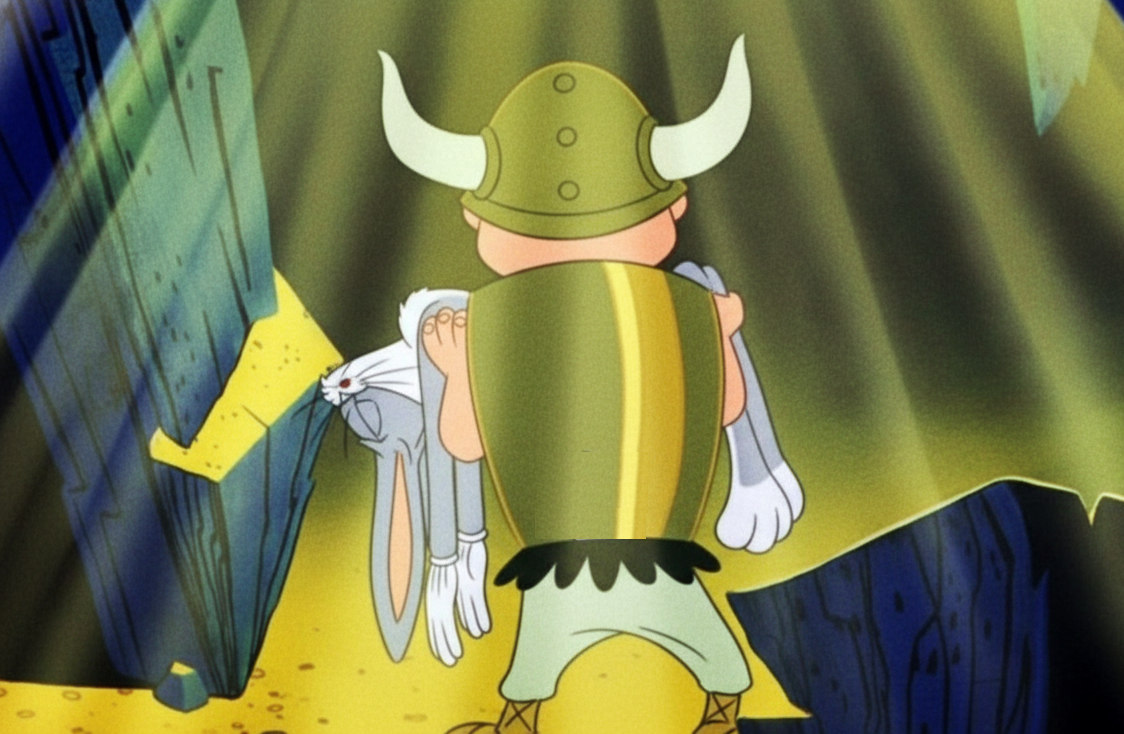
Tonight’s performance of Richard Wagner’s “The Valkyrie” is sponsored by Todd’s T4.
Spoiler: The wabbit was, indeed, killed.
No matter the reason, the end result is… silence.
Recognition: What Employees Want vs. What Companies Deliver
Christmas perks, whether a cheque, a turkey, or Clark Griswold’s jelly subscription, are designed to be blanket gestures. They’re distributed en masse, not because anyone went above and beyond, but because someone from management realized it was December. These gestures are appreciated, sure, but multiple surveys and reports find that employees:
would prefer new or additional benefits over a raise
would stay at a lower paying job if they felt appreciated
hadn’t received any recognition in the past year – even though recognition strongly correlates with morale and productivity
So if your company’s retention strategy has been reduced to tethering employees to their desks with logging chains, then you may have a problem. And maybe showing some appreciation occasionally might be enough to keep people from absconding through the nearest unguarded exit at the first opportunity.
And that’s where personalized recognition comes in. Unlike seasonal perks, tailored gratitude taps into the psychology of belonging and achievement. Neuroscience research shows that specific, individualized thanks activate the brain’s reward system, releasing dopamine that reinforces motivation and satisfaction. Companies having strong recognition cultures report high levels of employee engagement and retention.
The business impact is clear: a handwritten note after a crisis, or a manager’s email naming exactly what someone did well, often carries more weight than a generic bonus envelope.
These same reports also highlight trends including frequent and specific recognition, personalized thank‑you notes, and non‑monetary incentives like flexible schedules, extra time off, or opportunities to learn new skills — perks that acknowledge you as a human, not just a productivity machine with a debilitating coffee addiction.
So yes, gratitude is trending. And that’s a good thing. Because while the turkey may feed your family and the Petro‑Canada gift card may feed your car’s gas tank, the memo feeds your soul. And it’s this that employees will remember years later — tucked into a desk drawer or pinned to a bulletin board — surviving long after the free pizza has disappeared.
Redefining SWAG
Here’s the uncomfortable truth: most of us don’t remember the free pizza. We remember the memo. We remember the email. We remember the note that said, “Thanks for saving us from disaster.” Those bits and bobs of recognition outlast the carbs, the swag, and even the bonus cheque which evaporated instantly in the wake of taxes and a cell phone bill.
Traditionally, SWAG stands for “stuff we all get”. Maybe it’s time to redefine it as “simple words, authentic gratitude”.
Non‑monetary gratitude works because it’s personal. It says, “We see you, not just the work you produce.” And in a world where employees are often treated like interchangeable cogs, that acknowledgment is priceless.
Of course, companies will keep handing out pizza parties, fleece vests, gift cards and frozen poultry, because those are easy. But the harder, more meaningful work is remembering to say thank you — sincerely and specifically.
So if you’re a manager, skip the pizza party. Instead, compose a memo. Or send an email. Or scrawl out a post‑it note. Because long after the heartburn from the pepperoni has passed, a few words on a piece of paper telling them that they were “noticed and appreciated” is what will stick with them.
Like what you read? I write, rewrite, overthink, rewrite again, and eventually post these things in hopes they resonate. If something struck a chord, sparked an idea, or — most importantly — made you laugh, please drop a comment below. Sarcasm is welcome, cruelty is not. So be honest, and be nice. It’s possible to do both.
And if you'd like to support the effort (or just bribe me to keep going), you can buy me a coffee. No pressure — but caffeine is a powerful motivator.
Full disclosure: you can’t actually make me buy a coffee with your donation. I might use it for a beer instead.