
The To-Don’t List (In Six Quotes, From Zen to Zevon)
On time, productivity, and the art of not finishing your to-do list.
I Haven’t Read the Book (But I Did Watch the TikTok)
I haven’t read Four Thousand Weeks by Oliver Burkeman. I probably won’t. But, curiosity being what it is, I did a little math to see if I might guess the book’s subject. Four thousand weeks works out to almost 77 years. Not 75. Not 80. Seventy-seven.
Naturally, I assumed it was about the projected gap between Toronto Maple Leaf Stanley Cup victories. Turns out, I was wrong. Again.
So instead I watched a TikTok about the book. I know that’s not the same thing as reading it, but it was enough for me to find out what it was all about. The 4,000 weeks (or 77 years) is meant to represent an average lifetime. So the book is about life. And the premise? You won’t get everything done.
Ever.
Most of us already know we won’t walk the earth forever. But Burkeman argues we’ve also set unrealistic expectations for what we’ll accomplish. We chase efficiency and productivity, and our reward is… more work. Answer emails faster, and you just get more replies.
He calls this the “Efficiency Trap.” And once you’re caught in it, your quality of life starts to erode. Instead of meeting a friend for lunch, you send a text. It’s quicker, more convenient, and doesn’t require you both to carve out the same free slot in your schedules. But making the choice to just send a text comes with sacrifice. Texting your friend is just not the same as laughing with them about all the stupid things you did together over wings and a couple of wobbly pops.
We need to rewire our thinking. Prune the dead branches and keep only the boughs worth nurturing. In other words, make time for what matters, and stop wasting it on what doesn’t. The end goal remains the same: getting everything done. But it becomes much easier when you stop pissing away your time doomscrolling or writing a blog no one reads.
Linda Ellis, in her 1996 poem The Dash, made a very poignant observation when she wrote that a person’s life is represented by the dash between their birth and death dates. That nondescript little line is the most important thing that will be etched on your tombstone, because it symbolizes everything you’ve ever done. So maybe instead of trying to pad our memorials with busywork, we should focus on the things that matter: family, friends, health, and the occasional bucket-list adventure. And accept the trade-offs that come with saying “no.”
If you can “shuffle off this mortal coil” — as Bill Shakespeare once put it — while making peace with the fact that some things will remain unfinished, something interesting happens. You start making more meaningful choices, yes, but it’s because you stop pretending you can conquer time.
And really, conquering time is a foolish pursuit to begin with. No one ever beats it. Time’s record is, like, 109 billion–0. Undefeated.
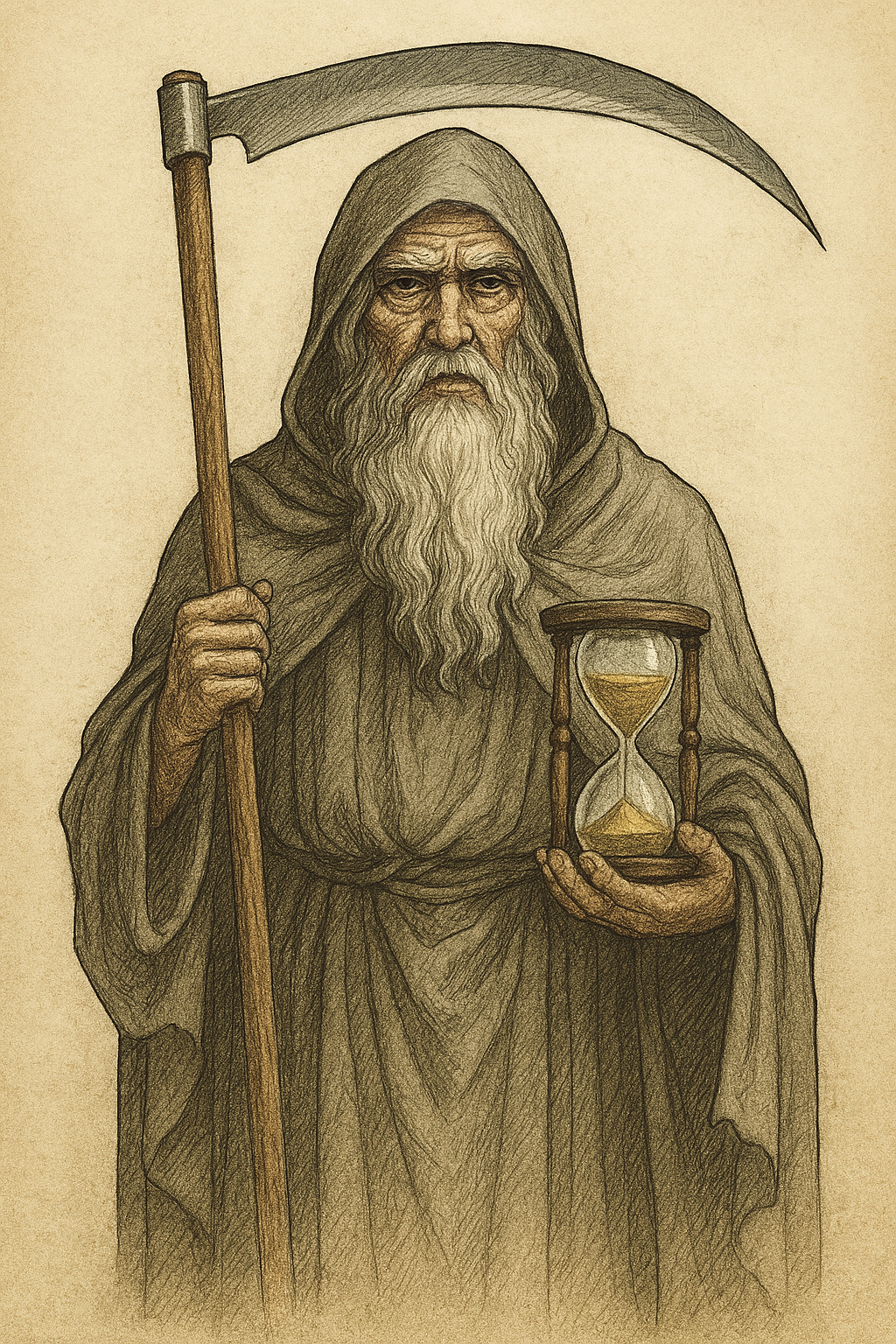
Come at me, bro.
Time: A Non-Renewable Resource
The dictionary defines time as “the continuous progression of existence that occurs in an apparently irreversible succession from the past, through the present, and into the future.” This is a pretty good description, in that it describes how most of us perceive or experience time.
Ask a physicist what time is, and you’ll get a long pause, a wistful stare off into the distance, and eventually: “Well, that’s a very interesting question…” Physicist John Wheeler once quipped that “Time is nature’s way of ensuring that everything doesn’t happen all at once.” And even if a physicist could define time in a way truly worthy of their profession, they’d then couch their words by droning on about relativity and how time passes slower for people the faster they move. It’s like when you’re speeding to get somewhere and get pulled over. By the time you’ve collected your ticket and your shame, you’re late anyway. Had you gone the speed limit, you’d have been on time. So even though you were driving fast, your arrival was delayed because, somehow, time slowed down for you. And that’s how relativity works.
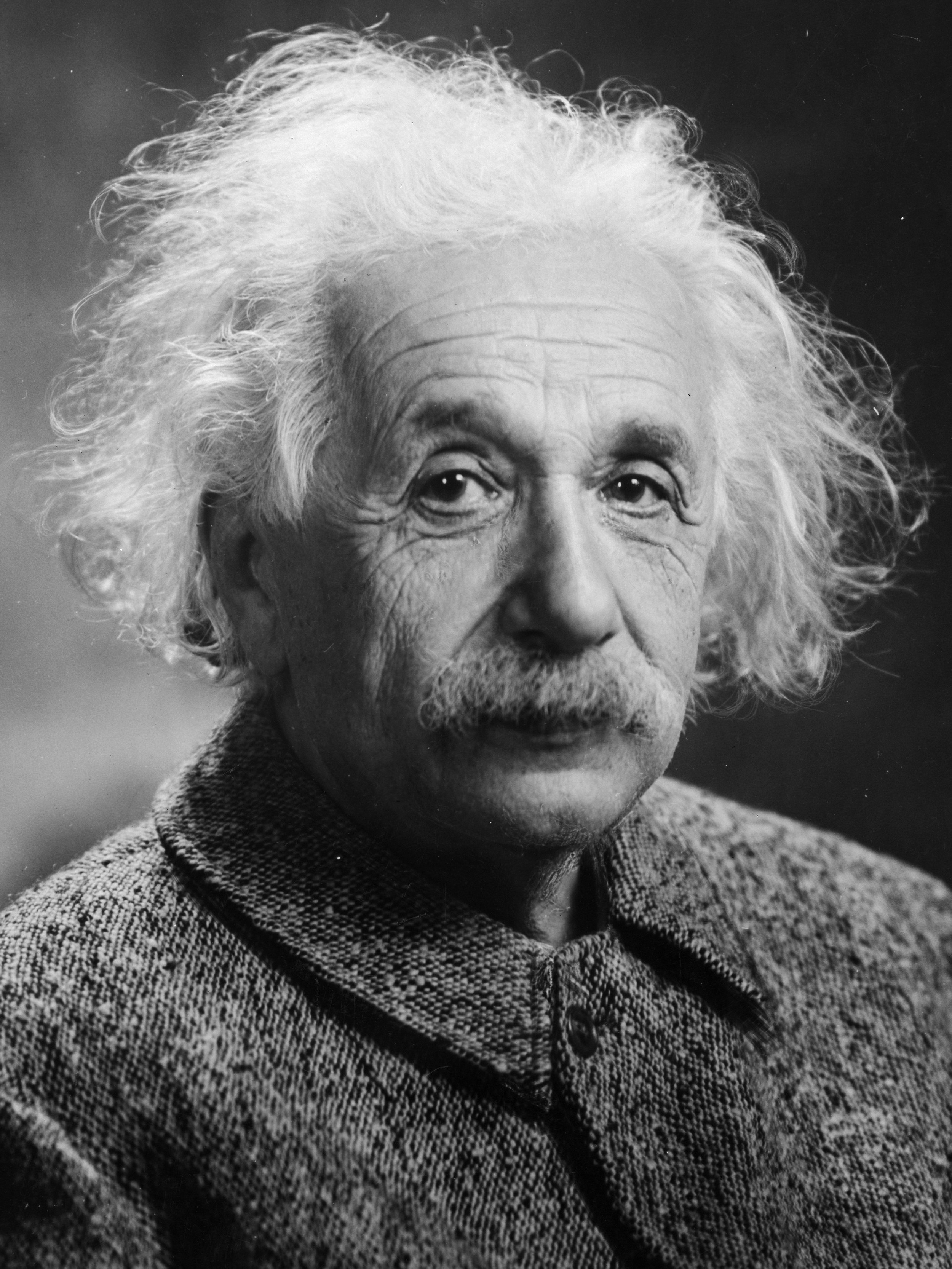
Nein, Dummkopf.
My thesis-worthy explanation of relativity notwithstanding, the real thing to remember is that, eventually, time runs out for us all. Time, for each of us, is finite. And once it has passed, it vanishes forever from the balance sheet of our lives. We can’t earn it back. We can’t set it aside and save it to use for something else later on. You can only spend it in the moment — wisely or otherwisely.
This isn’t a revelation. But it is something most of us never really think about while we’re trying to alphabetize our inbox or optimize our morning routines. We treat time like a spreadsheet problem: if we reorder all of our tasks and format the cells correctly, we’ll unlock a bonus hour.
Except you won’t. There is no bonus hour.
4,000 weeks.
4,000 1x7 rectangles on a calendar.
And every Sunday morning at midnight, one more falls away, quietly and permanently. And the time that remains is all we have from all we were ever given.
Six Quotes to Help Make Sense of it All
Sometimes, the best way to make sense of something as slippery as time is to let other people do the talking. Here are six quotes that I’m using to help me reframe my relationship with productivity, mortality, and the art of letting go.
1. “Let go or be dragged.” — Zen Proverb
Maybe you heard a gong go off in the distance when you read that. These words serve as a reminder that clinging to every task, every goal, every non-essential commitment is a surefire way to get emotionally road-rashed.
Some things you must hang on to — work, family, maybe the occasional Canadian Tire receipt. That’s just life.
But we must remember that there is so much more in our lives that we have the power to set aside or ignore that we don’t. It’s like that drawer you have crammed with cords and adapters from every gadget you’ve owned since Joe Clark was Prime Minister. When exactly do you imagine needing a charger for a 1992 Nokia flip phone?
But like the clutter that fills our junk drawers, we also needlessly cling to a lot of personal junk. We’ve already talked about how our life goals can be overambitious because we feel guilty saying “no”. But there’s lots more in the way of drawer debris that we can clear away.
We are self-critical because we think reminding ourselves that we aren’t perfect will somehow pave the way to becoming a better person. We stay in toxic relationships because we desperately hope that something will miraculously change. We pursue perfection as if our obituaries will be scored by a panel of strangers on an episode of “This Was Your Life”.
Why?
There are so many unnecessary things that hang heavy on our lives that we need to loosen our grip on. Remember, letting go isn’t neglectful. It’s a necessary strategy, and the difference between leading your life and being dragged by it.
2. “Memento mori.” — Latin for “Remember, you must die.”
This phrase is believed to have originated from an ancient Roman tradition.
After major victories, Roman generals were paraded through the streets in horse‑drawn chariots, as citizens lined the streets raucously cheering. As you might imagine, a reception like this usually resulted in the general’s ego resembling the bouncy castle at a kid’s birthday party — inflated, and about as big. And all the while that the general is basking in his glory, soaking up accolades like a laurel-wreathed dish sponge in a toga, standing behind him in the same chariot stood a slave who had one job — to whisper again and again:
“Respice post te. Hominem te esse memento. Memento mori!”
“Look behind you. Remember, you are a man. Remember, you must die!”
It was the slave’s responsibility to ride shotgun and remind the general that, despite all the hoopla and adulation, he was still just a man. Mortal.
These words serve as a symbolic reminder of our own temporality and the brevity of life. Marcus Aurelius put it even more bluntly: “You could leave life right now. Let that determine what you do and say and think.” It’s basically the ancient Roman equivalent of “Don’t buy green bananas.”
Morbid? Maybe.
Clarifying? Definitely.
And, for balance in your life, occasionally remind yourself of the reciprocal mantra: “Memento vivere.”
“Remember to live.”
3. “The years teach much which the days never knew.” — Ralph Waldo Emerson
This one reminds us that wisdom doesn’t arrive in a flash — it accumulates slowly, like rings on a tree. The daily grind may feel pointless and frustrating in the moment. But over time, it grows into an understanding of what truly matters.
I very nearly used the words of Carol Burnett here, who once said: “Comedy is tragedy plus time.” It’s a modern-day proverb that perfectly frames the whole “someday we’ll all look back at this and laugh” thing. I almost used her line instead, because it conveys the same idea. That we look at the things that are problematic, troublesome, or even sad today through a much different lens… provided enough water has passed under the bridge.
Days are narrow. They deal in the here and now: the email you forgot to send, the burnt casserole, the flat tire on the highway.
Years, though, are panoramic. With time, you learn that the email didn’t matter, the casserole was edible with enough ketchup, and to check over your car before going on a long trip. Mistakes happen on a daily basis. But the years teach us that our mistakes aren’t catastrophes — they’re life lessons.
So when Emerson says “the years teach much,” he’s reminding us that perspective is a long game. The days may never know the lesson, but the years are patient professors. And from patience comes perspective.
4. “Nothing gold can stay.” — Robert Frost
From his poem of the same name.
Nature’s first green is gold,
Her hardest hue to hold.
Her early leaf’s a flower;
But only so an hour.
Then leaf subsides to leaf.
So Eden sank to grief,
So dawn goes down to day.
Nothing gold can stay.
Robert Frost, “Nothing Gold Can Stay” (1923).
Just eight lines long, yet it rings with more truth than any TED Talk I’ve ever listened to. Frost reminds us that beauty is brief, and that’s the point. That’s what makes it beautiful. Everything fades.
Thankfully, this includes the trauma from that three-hour strategic planning meeting on Microsoft Teams your boss forced you to attend. With your camera on.
But the really good things — the vacation, the Tuesday nap, friendships — are all transient. They’re golden precisely because they don’t last. It’s their impermanence that makes them worth recognizing and treasuring before they’re taken away.
So notice these things. Appreciate them. Then, when the time comes, let them go.
5. “You cannot step into the same river twice.” — Heraclitus
Change is the only constant. Which is ironic, because “constant change” is an oxymoron — like saying “jumbo shrimp”, “vegetarian food” or “happily married”.
Heraclitus reminds us that everything is in flux. The river you step into today won’t be the same river tomorrow. The water has moved on, the banks will have shifted ever so slightly, and a ripple has been caused by someone upstream who fell off their inner tube while reaching for a beer from the cooler they were towing behind them.
The same goes for life. You revisit your childhood home, and it feels smaller. You rewatch a favorite sitcom, and suddenly the jokes are cringey because you are 40 years removed from what was considered as acceptable humor in the ‘80's. You return to the office after working from home because of COVID, and the coffee machine has been replaced by something that looks like it requires a Ph.D. in Electronic Engineering to operate. And it only takes Bitcoin.
We crave permanence, but the truth is that that everything that exists right now is temporary and evolving. Jerry Seinfeld postulated that everything on earth is in varying stages of becoming garbage, a process he called “crapification”. Even the things that feel stable and constant — relationships, routines, the part in your hair — are changing in subtle ways. The part you had yesterday isn’t the part you’ll have tomorrow. Each morning, it imperceptibly drifts back and widens, before eventually disappearing altogether in a protracted process known as “forehead creep”.
Heraclitus’ river is a reminder to embrace the flux. To stop clinging to the idea that things will stay the same, and instead appreciate the fact that they don’t. Because change is what keeps life interesting. Without it, we’d all still be stuck with dial‑up internet and floppy disks.
So yes, you can’t step into the same river twice. And maybe that’s what makes the journey worth taking.
6. “Enjoy every sandwich.” — Warren Zevon
David Letterman was a big fan of Warren Zevon, so much so that if he wasn’t booked as his show’s musical guest he would often sub in as musical director whenever Paul Shaffer was away. So when Zevon was diagnosed with terminal lung cancer, it wasn’t all that surprising that he was booked as the sole guest on the October 30, 2002 episode of The Late Show With David Letterman. When asked how his perspective had changed and what life was like in the face of his diagnosis, he replied: “It’s more valuable now. You’re reminded to enjoy every sandwich and every minute of it, playing with the guys and being with the kids and everything.”
Less than a year later, he was gone.
It may seem to be a bit of a trivialization, equating the very best things in our lives to a pastrami on marbled rye. Or a soggy, barely toasted grilled cheese. But his words are all about being present in the moment, and grateful for what you already have. Even the smallest of joys count. Like finding a forgotten $5 bill in the pocket of a jacket you haven’t worn for a while. Or finally loosening that popcorn hull from your teeth that’s been lodged there since last Sunday. Or pulling into a crowded parking lot at the perfect time to nab a great spot just as it’s being vacated.
Once you’ve accepted the short-lived nature of everything around you (including yourself), gratitude is what remains.
The End
So here’s what I’m learning, slowly and imperfectly:
I won’t finish everything.
Won’t please everyone.
Won’t get it all right.
But I can choose what matters.
I can let go of the rest.
I can prune the unnecessary so the essential can breathe.
The best time to plant a tree was 20 years ago. The second-best time is now. Which is another way of saying: it’s never too late. Start where you are, with what you have and move forward.
Once you’ve accepted that time is finite, that perfection is a myth, and that your to-do list will outlive you, what remains isn’t panic. It’s peace. It’s presence.
And maybe a really good sandwich.
Like what you read? I write, rewrite, overthink, rewrite again, and eventually post these things in hopes they resonate. If something struck a chord, sparked an idea, or — most importantly — made you laugh, please drop a comment below. Sarcasm is welcome, cruelty is not. So be honest, and be nice. It’s possible to do both.
And if you'd like to support the effort (or just bribe me to keep going), you can buy me a coffee. No pressure — but caffeine is a powerful motivator.
Full disclosure: you can’t actually make me buy a coffee with your donation. I might use it for a beer instead.