
When Facts Become Artifacts
Why What We “Know” Keeps Changing — and Why We Should Too
When the Universe Issues a Patch Update
There’s a unique kind of confusion that hits when you learn that something you were once taught as solid, settled science has been retired. Nobody held a press conference. The old fact was simply... replaced.
For decades, ulcers were a stress problem.
Everyone knew this.
Doctors said it.
Textbooks said it.
Your Uncle Mel, who doesn’t trust doctors and has a tenuous relationship with reality at the best of times, said it even louder while scarfing back Rolaids like they were Pez.
Stress caused ulcers.
Case closed.
Then two Australian researchers—Barry Marshall and Robin Warren—discovered in the 1980s that ulcers were actually caused by H. pylori bacteria.
Your boss, your family, your massive credit-card debt — still there. Just not responsible for that tiny little Krakatoa that would occasionally erupt in your duodenum.
It was all just bacteria.
The shift was so radical that Marshall famously drank a beaker of it to prove his point. Apparently, peer review in science sometimes means, “Hold my beer — because I’m gonna drink this instead.”
And then, years later, the consensus shifted again:
Actually… it’s both the bacteria and stress to blame.
Today’s view is that H. pylori is the primary cause, with stress acting more like an accomplice than a mastermind.
Science hadn’t flip‑flopped.
It had refined itself.
This is the part we forget: facts don’t just change — they evolve.
And they evolve at a pace that often leaves the rest of us blinking in confusion, still clutching the previous version.
The Uncertainty of Certainty
That little jolt — the “Wait… what?” moment — is exactly what complexity scientist Samuel Arbesman writes about in The Half‑Life of Facts. His central idea is simple:
Much of what we “know” has an expiration date.
We all know facts change — but we rarely appreciate just how fast they do.
Arbesman points to research showing that entire fields have measurable decay rates — the time it takes for half of a discipline’s knowledge to be rendered obsolete.
Medical knowledge, for example, has been cited by some as having a half‑life of roughly five years.
Which is, objectively, fantastic news for humanity.
For me personally? Less so.
It’s the main reason I schedule five years between prostate exams — I keep hoping there will be a less invasive way to conduct the test on the proctological horizon. No such luck as yet.
A rapid turnover in medical knowledge also helps explain why people are living longer — and, by extension, why the cost-of-living adjustment on my pension cheque is rapidly regressing to zero.
If some of the fossils on my pension plan could vanish from the payroll already, I might finally be able to afford the smart toaster I’ve been eyeing.
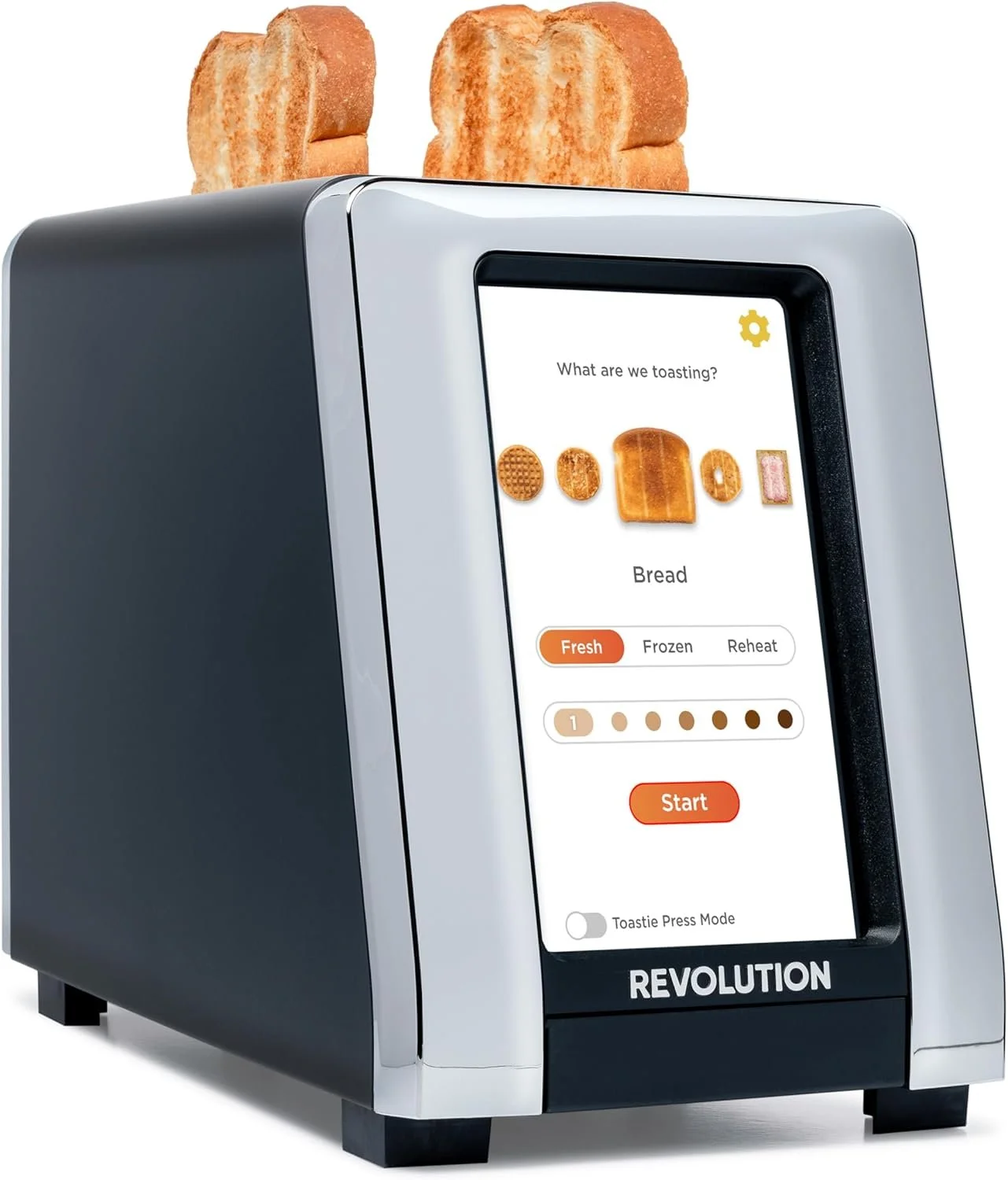
Built‑in Wi‑Fi connectivity to give you the latest weather forecast while you make breakfast. And priced so you can no longer afford the bread that it can toast perfectly.
Anyway, the research also shows that knowledge half‑life decay rates vary by discipline.
Physics lasts longer — anywhere between 10 and 13 years.
Engineering is more like 3 to 5.
And Technology barely survives a long weekend.
Unless, of course, you’re talking about COBOL. Still widely used worldwide and hasn’t changed a whit in the 66 years since it came out — meaning its half‑life is infinite.
The overall pattern is the same:
Evidence accumulates.
Methods improve.
And yesterday’s truth becomes today’s “Not so much.”
That’s what happens to facts.
They evolve.
We? Not so much.
The Strange Afterlife of Outdated Facts
Not all outdated knowledge disappears on schedule.
Some of it is harmless — the kind of trivia that makes you sound knowledgeable at dinner parties until someone pulls out their phone and proves you wrong.
Some of it is embarrassing — realizing the thing you’ve believed for decades was never true at all.
Consider the Great Wall of China being visible from space.
Astronauts have been saying for years that it isn’t. The wall is too narrow. The resolution isn’t there. It doesn’t work.
Yet ask someone, and about half the time you’ll get a confident yes.
The falsehood arrived first.
It was simple.
It was memorable.
It was satisfying.
Then there are the facts that were genuinely true once.
Pluto was a planet.
We memorized it.
We drew it in textbooks.
We gave it a place of honour at the end of the solar system.
Then, in 2006, the International Astronomical Union demoted it to — get this — a dwarf planet.
Uhhhh, the preferred terminology is little planet, you insensitive pinheads.
The reclassification also broke the mnemonic I used as a kid to remember the names and order of the planets:
My Very Elegant Mother Just Served Us Nine Pizzas.
Now it just ends with “nine.”
Nine what?
What did Mom just serve us nine of?
No one knows, because that’s where the sentence now ends.
I’ve since updated it to:
My Very Egregious Mother Just Served Us Nothing —
and now we’re all starving and Mom’s under suspicion of child neglect. All because a bunch of eggheads pointed a telescope at the sky and got opinionated.
A fact didn’t vanish.
A category did.
The science didn’t change so much as it became more precise.
But emotionally?
We’re still not over it.
And physically?
Well, the pizza I’d normally be eating is now nowhere to be found. So ingestion appears to be a problem as well.
This is the strange afterlife of outdated facts: they linger long after their expiration date — not because they’re true, but because they’re familiar.
Familiarity is powerful — powerful enough to keep outdated ideas alive long after the evidence has moved on.
Why We Don’t Update When the Facts Do
If people updated their beliefs in lockstep with new findings, this would be a very short article. But they don’t — and the gap between the two is where things get interesting.
Science moves quickly.
Humans… less so.
Remember how I said earlier that medical knowledge has a half‑life of about five years? Well, it takes roughly 17 years for new medical findings to become standard practice.
And the public often lags even further behind — sometimes by years.
Which means the treatments we abandon today were often relegated to the medical scrap heap two decades ago. By the time we finally update our beliefs, the science that prompted the update is already well on its way out the door and into the dumpster in the back lane.
But if you think twenty years is a long time, consider Galileo.
He had observational evidence in 1610 that the Earth orbits the Sun.
The Church, however, was deeply committed to the opposite idea — namely, that everything in the heavens revolved neatly around us. So Galileo's model was formally rejected in 1616, he was found "vehemently suspect of heresy" in 1633, and was placed under house arrest.
Thankfully, cooler heads — bedecked in pointy hats — eventually prevailed. The Catholic Church, renowned for its institutional humility and swift embrace of inconvenient evidence, quickly changed course and acknowledged that it had erred in its handling of the Galileo affair, dismissing the whole imbroglio as a "tragic mutual incomprehension."
In 1992.
Asked for his reaction to the Church's speedy reversal, Galileo had nothing to offer — having been dead for three and a half centuries.
Calling it a "tragic mutual incomprehension" is a remarkably self-serving way of admitting wrongdoing without admitting any such thing, no?
"Look, mistakes were made — tragic ones, at that — but let's not get bogged down in who made them."
At any rate, psychologists have a name for this.
It’s called the continued influence effect: once we learn something, we keep relying on it long after it’s been revised or disproven. Not because we’re stubborn, but because the first version of a fact tends to stick. It’s familiar. It’s easy. It’s already installed.
And feelings are faster than facts.
A false claim hits like a spark — surprising, emotional, memorable.
A correction? It’s a damp towel.
We don’t update on facts.
We update on friction.
If updating requires admitting you were wrong, you’ll resist.
If the correction comes from someone you distrust, you’ll resist harder.
If everyone around you still believes the old thing, resistance becomes almost impossible.
Some people treat their beliefs like working hypotheses.
Others treat them like tattoos.
Meanwhile, corrections spread slowly.
Updates spread even slower.
And most of us don’t have a mental notification system that says, “Hey, remember that thing you learned in 1998? Yeah… that’s been patched.”
The result is a growing collection of knowledge artifacts — ideas that were once true, or partly true, or simply sounded true — that we continue to carry around as if they’re still current.
The Hardest Part: Updating Into Uncertainty
And even when we do update, there’s another problem: today’s “facts” are tomorrow’s artifacts in waiting. If we learned next week that H. pylori isn’t the culprit after all — that it’s actually something else — we’d face the same friction all over again. The issue isn’t just that we cling to old knowledge; it’s that we have no reliable way to know which of our current beliefs will need patching in five years.
It puts us in a strange position. We’re told to hold our beliefs lightly, but we still have to act on them. You can’t live as if everything is provisional — you still need to take antibiotics for H. pylori now, even if science might revise the story later.
Maybe the real challenge isn’t accepting that facts change (we mostly accept that intellectually), but developing the humility to distinguish between:
facts we’re confident about because the evidence is strong and recent
facts we’re holding because they’re familiar
facts we’ve updated because better evidence arrived
and facts we’ve never questioned because no one’s challenged them yet
That last category is the dangerous one.
Living With a World That Won’t Sit Still
This is the part where a lesser article would offer a moral — a tidy lesson to make all this uncertainty feel manageable.
But that's not what this topic wants.
The half‑life of facts isn't a warning.
It's a reminder.
A reminder that knowledge is provisional.
That certainty is temporary.
That learning is less about being right and more about being willing to be wrong.
I remember years ago hearing that really old windows were thicker at the bottom than the top because glass wasn't actually a solid but a highly viscous liquid. I repeated it confidently for years. But one day I noticed something: I'd never actually verified it.
It turns out that glass is technically an amorphous solid that can flow — but at a rate so slow it would take the age of the universe (14 billion years) to move a single millimeter. I was confidently wrong.
But here's what stayed with me: the certainty felt exactly the same whether it was justified or not. The conviction in my voice was identical. The only difference was whether I'd actually checked.
Now, whenever I catch myself explaining something with too much certainty, that old glass story flashes in my head. It's become an early warning system: When you feel too sure without verification, that's the moment to pause.
The dangerous beliefs aren't the ones we're uncertain about. They're the ones we're certain about without ever checking.
We don't need to keep up with every patch.
We just need to accept that updating isn't a failure — it's maintenance.
Facts evolve.
Science revises.
The universe updates itself constantly.
We're just trying to read the release notes before they're out of date.
Like what you read? I write, rewrite, overthink, rewrite again, and eventually post these things in hopes they resonate. If something struck a chord, sparked an idea, or — most importantly — made you laugh, please drop a comment below. Sarcasm is welcome, cruelty is not. So be honest, and be nice. It’s possible to do both.
And if you'd like to support the effort (or just bribe me to keep going), you can buy me a coffee. No pressure — but caffeine is a powerful motivator.
Full disclosure: you can’t actually make me buy a coffee with your donation. I might use it for a beer instead.