
Five Musicians and an Astrophysicist Walk Into an IKEA
The Greatest Commencement Address That Will Never Be Delivered
Unsolicited Remarks From an Uninvited Speaker
This is the greatest commencement address that will never be delivered.
Not because it isn’t good.
You see, my greatest professional skill wasn’t insight or leadership or vision. It was appearing to be deeply engaged and contemplative in meetings — when, in reality, that look came from being locked in an epic showdown with my own brain as I floundered to remember the one grocery item my wife trusted me not to forget.
And that, right there, is why no self‑respecting school board is handing me a microphone.
So I’ll have to settle for typing it up and saving it on a server somewhere, where the three or four people who follow my blog may deign to read it — along with the occasional misguided soul who clicked the wrong link.
And so, if you’ll indulge me…
Graduates, families, faculty, and the gate‑crashers who wandered in because they saw balloons and heard rumours of free refreshments — welcome.
Today’s address is titled “Five Musicians and an Astrophysicist Walk Into an IKEA.”
It sounds like a joke. It was meant to.
But it isn’t.
It’s an allegory for your life — a metaphor in four acts, if you will.
Ready?
Good. Let’s begin.
The story goes that towards the end of Mozart’s life, a young student asked him how to write a symphony. Mozart replied that symphonies were complicated, intricate things — the kind of project that could make you pull whoever’s hair it was out of your powdered wig — and suggested the student start with something simpler, like a sonata or a piece for a string quartet.
“But Herr Mozart,” the student protested, “you were writing symphonies when you were far younger than I am.”
To which Mozart replied, “Yes. But I also never had to ask anyone how to do it.”
I love this story. It’s short, which means you can tell it without watching someone’s eyes glaze over, and its message — delivered more than 200 years ago — still cuts with surgical precision today. Three lessons emerge, each one as relevant to modern life as it was to pantaloons and candlelight.
1. Talent Is Not Transferable
Mozart’s response — unambiguous, unvarnished, and unsentimental — makes one thing clear: talent and instinct cannot be taught. It sounds arrogant, but it’s really just a blunt truth. Mozart didn’t need to ask how to write a symphony because he had an extraordinary creative capacity that others may not have in the same measure, if at all.
The student’s mistake was assuming that by tracing Mozart’s path, he’d arrive at Mozart’s destination. That’s not how talent works. If it were, every kid who picked up a telescope 400 years ago would have been a contemporary of Galileo.
The lesson: Respect your own pace and process. There is deep satisfaction in forging your own path through life, so don’t deprive yourself of that joy by pursuing someone else’s. This is your journey, and yours alone.
2. Start Where You Are
The student had a goal — writing a symphony — but he was fixated on getting to the finish line immediately. Mozart’s advice is a reminder that mastery comes in stages. Today’s culture rewards fast success, instant achievement, and the false pretence that you can skip the boring parts if you just “believe in yourself” hard enough.
But jumping ahead without building foundational skills leads to frustration, burnout, or — worst of all — a LinkedIn post about “embracing failure.”
Most of us don’t get to start at the top. We start exactly where we are, with whatever tools we have, and we build from there.
The lesson: No matter your vocation — engineer, nurse, or composer — expertise is built in increments. One blueprint, one emergency‑room shift, one sonata at a time.
3. Originality Matters More Than Imitation
The deeper truth in this story is that you can’t reverse‑engineer genius. The student hoped that following Mozart’s timeline would unlock Mozart’s results. But true achievement comes from forging your own method, not mimicking someone else’s.
If imitation were enough, everyone with a laptop and an internet connection would be a blogger with thousands of followers. Trust me. I know.
The lesson: Be inspired by others, yes, but don’t try to become them. Look inward. What’s your unique strength? Your voice? Your curiosity? That’s where your best work will come from — and where the best version of yourself will be forged.
The Beatles were four guys with a stupid amount of talent.
People love to call them “musical geniuses,” but the truth is far less magical and far more relatable. Before they became legends, the Beatles were four exhausted teenagers playing in Hamburg clubs for hours on end — sometimes forty‑eight nights in a row, often to audiences consisting of three rowdy sailors and a hammered guy who thought he was in Budapest. They logged 1,200 hours of stage time in just a couple of years, the equivalent of performing a ninety‑minute concert every day, eight days a week. Talk about a hard day’s night.
The fact is, the Beatles were great. But attributing their greatness solely to “musical genius” conveniently ignores the paramount reason for their success: they worked themselves to the bone.
Their success wasn’t destiny. And it didn’t come easily. It was repetition, sweat, and a Herculean work ethic.
The Beatles serve as a reminder of three things:
Success is rarely spontaneous.
“Genius” is often just hard work wearing sunglasses.
There is no substitute for perseverance.
If you spend any time on social media, there’s a good chance astrophysicist Neil deGrasse Tyson has appeared on your feed. Among the many awards he’s received for his work as a science educator, he’s also been given several honorary doctorates — at least twenty‑three at last count.
And for a long time, he admitted he felt a little weird about it. After all, he was being handed a doctorate he didn’t technically earn.
One day, he was speaking with the head of NASA and mentioned he’d be attending a ceremony that afternoon to receive yet another honorary degree.
There must have been something in his tone — or maybe on his face — because the NASA director paused and asked whether Tyson was downplaying the experience.
Tyson admitted he was. You show up, they put a robe on you, someone mispronounces your name, and suddenly you’re a “Doctor” again.
The director then reframed the narrative:
“Your earned PhD — the one you spent years working for — is the promise that you will go on to do great things. Your honorary doctorates are the evidence that you have.”
That’s the kind of line that stops you in your tracks — and it certainly did for the multiply anointed Dr. Tyson.
It’s also a reminder that:
Recognition is not the goal.
Contribution is.
And sometimes the world sees your impact before you do.
People have a tendency to place a disproportionately high value on things they assembled themselves. Not because those things are objectively better. Often, quite the opposite. We do it because effort creates attachment.
Psychologists have a name for this — because of course they do.
They call it the IKEA Effect.
This is why people gaze proudly upon a wobbly bookshelf they spent an entire Saturday assembling with nothing but an Allen key and a cryptic instruction manual featuring that cartoon character with the enormous nose and permanent grin. (I’ve learned he is, in fact, officially known as IKEA Man.)
At any rate, your bookshelf may lean. Its shelves may not be level. It may collapse under the weight of three paperbacks and a scented candle. It may have several extra holes you drilled into it because you misinterpreted a picture and assumed the factory robot forgot to do its job.
But you built it.
And therefore, in your mind, it is magnificent.
Time and energy. Sweat and swear words.
They all become a kind of emotional down payment. Once we’ve paid it, we’re reluctant to walk away, even when walking away would be the sensible thing to do.
And it’s not just the effort you put into building flat‑packed furniture.
You will do this with careers.
With identities.
With relationships.
With a life plan you cobbled together at twenty‑two because it seemed like a good idea at the time and all your friends were cobbling something similar.
You’ll stick with things not because they’re right, but because you’ve sunk effort into them. You’ll defend them not because they’re working, but because abandoning them would mean admitting that effort alone doesn’t guarantee their future viability.
The truth is that while hard work deserves respect, it does not automatically deserve permanence.
This doesn’t mean effort is wasted. The skills you gained, the discipline you built, the resilience you developed — those are real. But the structure itself? The job, the role, the version of yourself you assembled? That may need to be dismantled and rebuilt.
And that’s not failure.
You are allowed to change your mind about the things you worked hard to build.
Growth does not come from undying loyalty to your past effort.
It comes from having the wisdom to know when to retighten the bolts on your BJÖRKSNÄS, or jam a matchbook under one leg of your FRÖTORP — and when to haul the whole lot out to the SKRÄPHÖG and start anew.

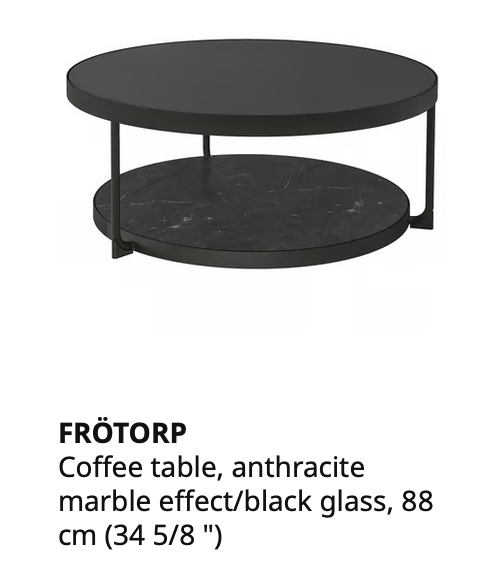
Is furniture even from IKEA if there isn’t an umlaut over at least one letter in the name?
Finale: Your Cornerstones
Mozart had talent he gifted to the world — but couldn’t simply hand to his student.
Find your own creative strengths and let them shape your future.
The Beatles had a work ethic that could power a small city.
Let diligence and effort be the things you’re known for, and the qualities that make you the person others want to work with.
Neil deGrasse Tyson has contributions that speak louder than any honorary doctorate on his wall.
Let your future achievements be the promise you make to the world today.
The IKEA Effect shows us that we cling to things simply because we built them.
Build wisdom by having the courage to let go of what no longer works so you can create something that does.
Your creative strengths.
Your work ethic.
Your contributions.
Your wisdom and courage.
Let these be the cornerstones you use to forge your future.
Because in the end, the greatest commencement address will be the one you write with the stories and experiences of your own life — not the one you hear from some talking head on a stage blabbing platitudes into a microphone.
Or the one you read in a sixth‑rate blog.
Like what you read? I write, rewrite, overthink, rewrite again, and eventually post these things in hopes they resonate. If something struck a chord, sparked an idea, or — most importantly — made you laugh, please drop a comment below. Sarcasm is welcome, cruelty is not. So be honest, and be nice. It’s possible to do both.
And if you'd like to support the effort (or just bribe me to keep going), you can buy me a coffee. No pressure — but caffeine is a powerful motivator.
Full disclosure: you can’t actually make me buy a coffee with your donation. I might use it for a beer instead.